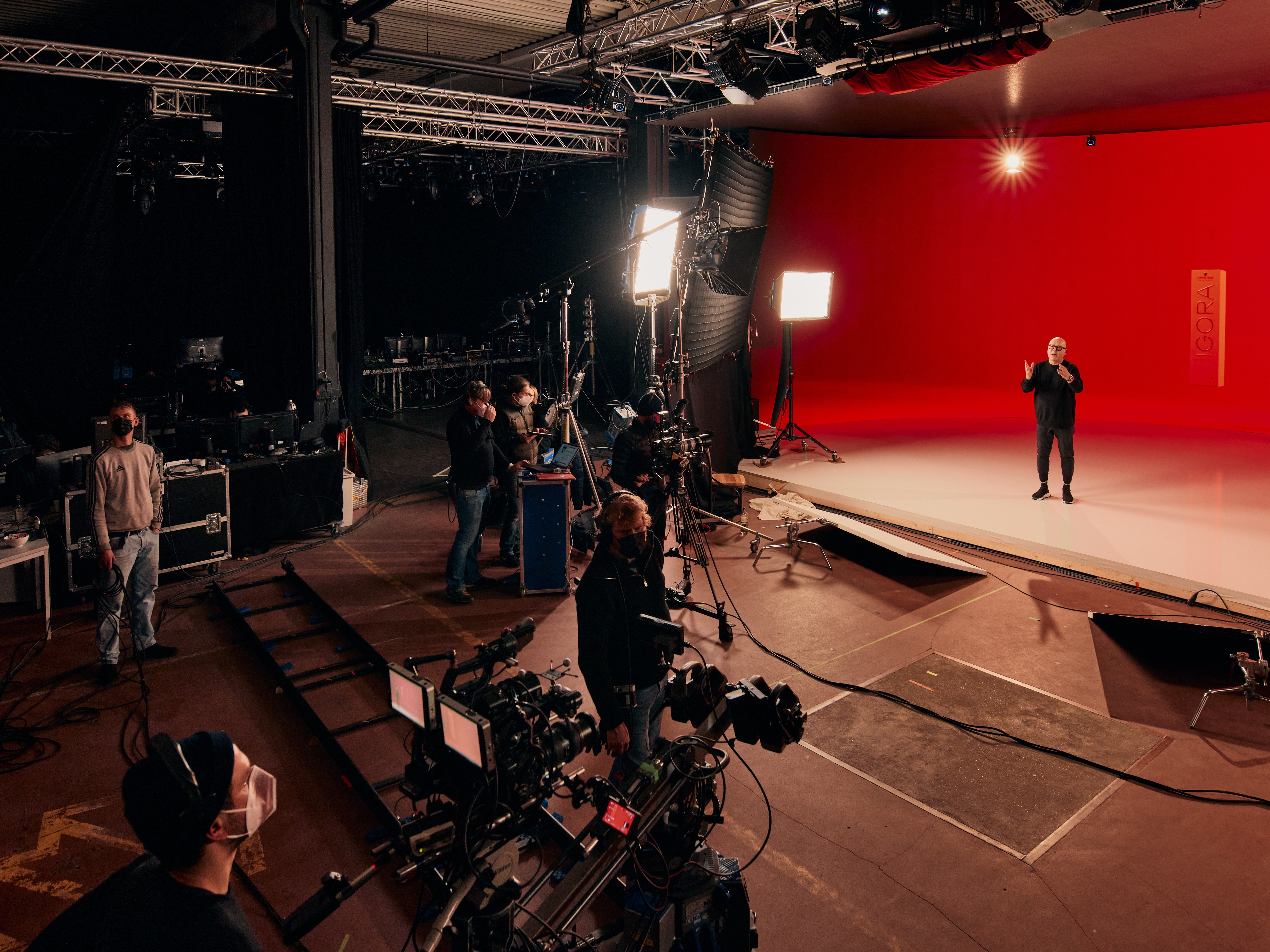

If you work in commercial film production, you know that the job is 90% solving impossible logistics and 10% pure terror regarding the budget.
Back in 2018, I was a producer at a company called CHUNK. The industry standard in Germany was rigid: we calculated budgets in the massive, complex GWA Excel Sheet. But the formal offer, the Anschreiben , was a Word document.
The workflow was archaic. We would calculate scenarios in Excel, and then a producer (or a poor production assistant) would manually type those numbers into Word. It was error-prone and exhausting. If the hourly rate of a single electrician changed, you had to update the Excel, recalculate the totals, open the Word doc, find the line item, and type it in again.
In commercial production, a budget is a fixed-price contract. A typo isn’t just a mistake; it’s a financial liability. If you offer it, you have to produce it for that price.

Photo Sebastian Dorbrietz
The “Naive” Spark
In 2019, my boss, Katherine Smithson, was on a task force call with the German Film Producers Alliance (Produktionsallianz). They were discussing this exact problem: How do we make the Excel sheet talk to the Word document?
I was sitting at the desk next to her, listening in. I thought, This can’t be that difficult.
When she hung up, I turned to her and said , with the supreme confidence of a 23 year old young man2 , “I can build a prototype. Give me two or three days.”
I genuinely thought a simple script could revolutionize the industry. I had no engineering background. I had never written a line of VBA code in my life. But I had logic, and I had the internet.

Photo Sebastian Dorbrietz
The 8-Month “3-Day” Project
It turns out, standardizing an entire industry is harder than it looks.
I presented the idea to the Alliance task force, and they loved it. But then the requirements poured in. The tool had to work for every company’s unique layout. It had to run on Windows and Mac. It had to handle file paths, generate duplicates, and toggle seamlessly between German and English.
This was the pre-ChatGPT era. My “engineering team” was Stack Overflow, Reddit, and trial-and-error.
It took eight months to reach a beta version. It took another three months to ship the first official version to the industry. But we did it. We built a bridge between the spreadsheet and the offer document.
Suddenly, a tool built by a guy who learned to code on the fly was running the commercial film production industry of an entire country.
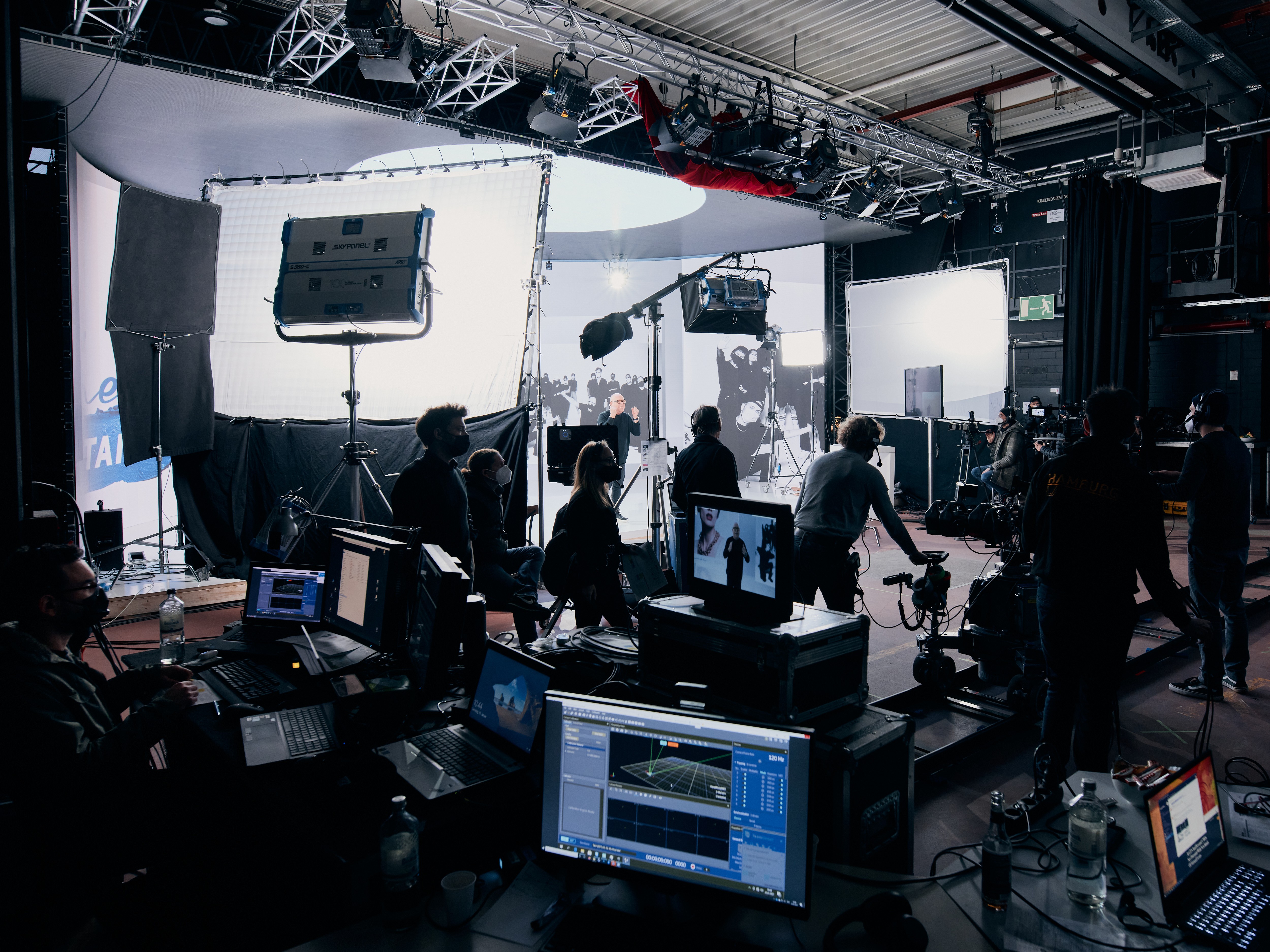
Photo Sebastian Dorbrietz
The Trap of Success: Becoming “The Excel Guy”
You can test a tool all you want, but feedback from 300 different production companies is a tsunami.
Because the tool was built in Excel, the database and the code were one and the same. This is fatal for software updates. “Refactoring” didn’t mean pushing code; it meant rebuilding the entire Excel sheet.
Every time I shipped an update or fixed a bug, I had to email a new Excel file to 1,000 email addresses. Then, 300 companies had to manually copy-paste their numbers from their old files into the new ones.
I became the “Excel Guy” for the whole industry. If every company had just one issue a year, that would be a support ticket every day. But it was much more than that. Since September 2020, I have managed over 2,200 email threads, countless WhatsApp messages, and panic phone calls.
I had digitized the industry, but I had also become its bottleneck.
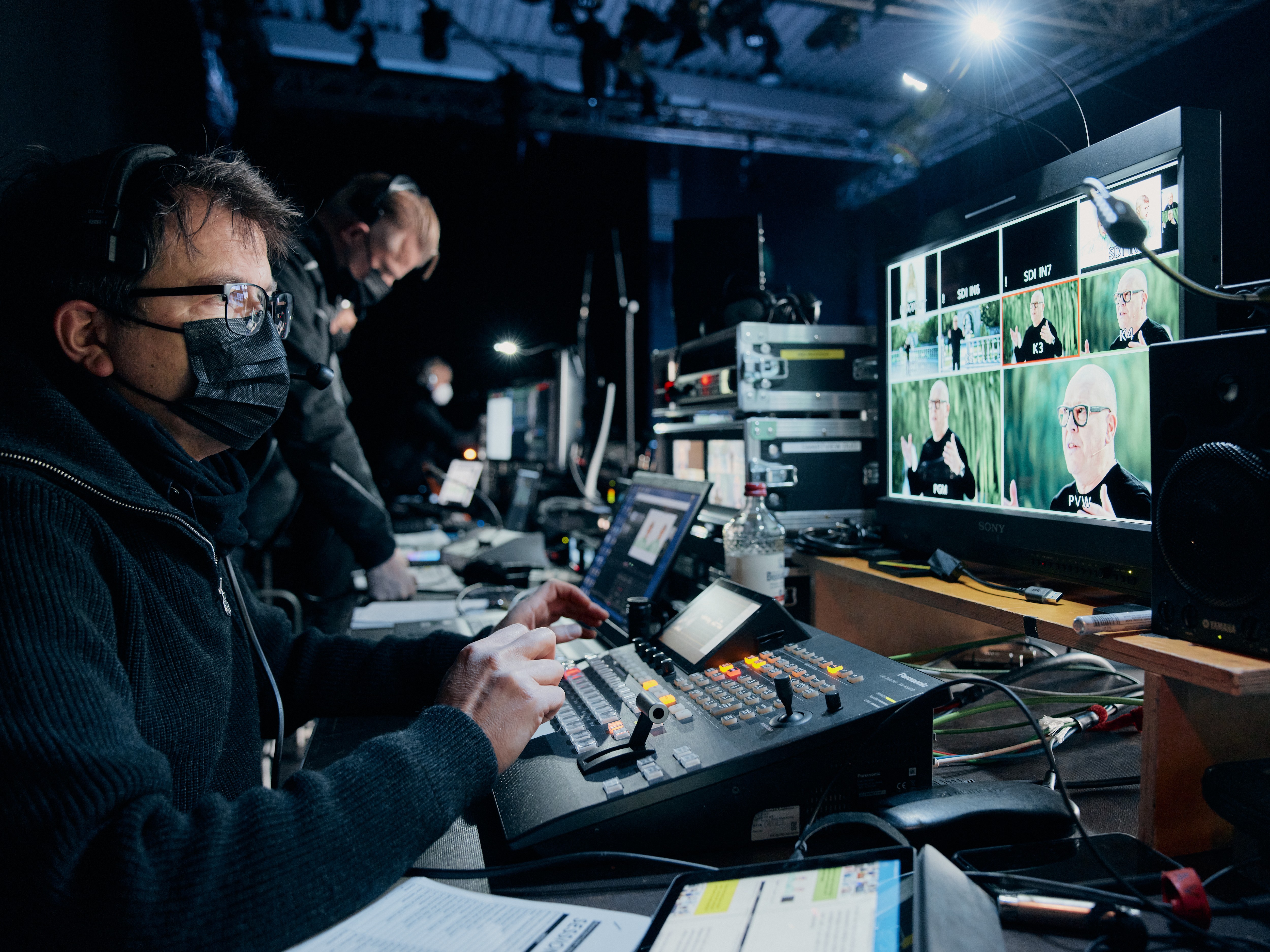
Photo Sebastian Dorbrietz
The Realization
The problem wasn’t the logic; the problem was the platform. Excel is incredible, but it is not a collaborative application.
Version control was a nightmare: V1, V2, V3, final, final_v2. Then you are in versiomn V12 and then you’re going back to V2…
Collaboration was impossible: Office 365 and VBAs n Excel and Word are a nightmare. Everything is stored in Drives or shared via Mail.
Updates were manual.
I realized that to truly solve this problem , without burning myself out and driving production assistants crazy with manual updates , we needed to move away from files entirely.
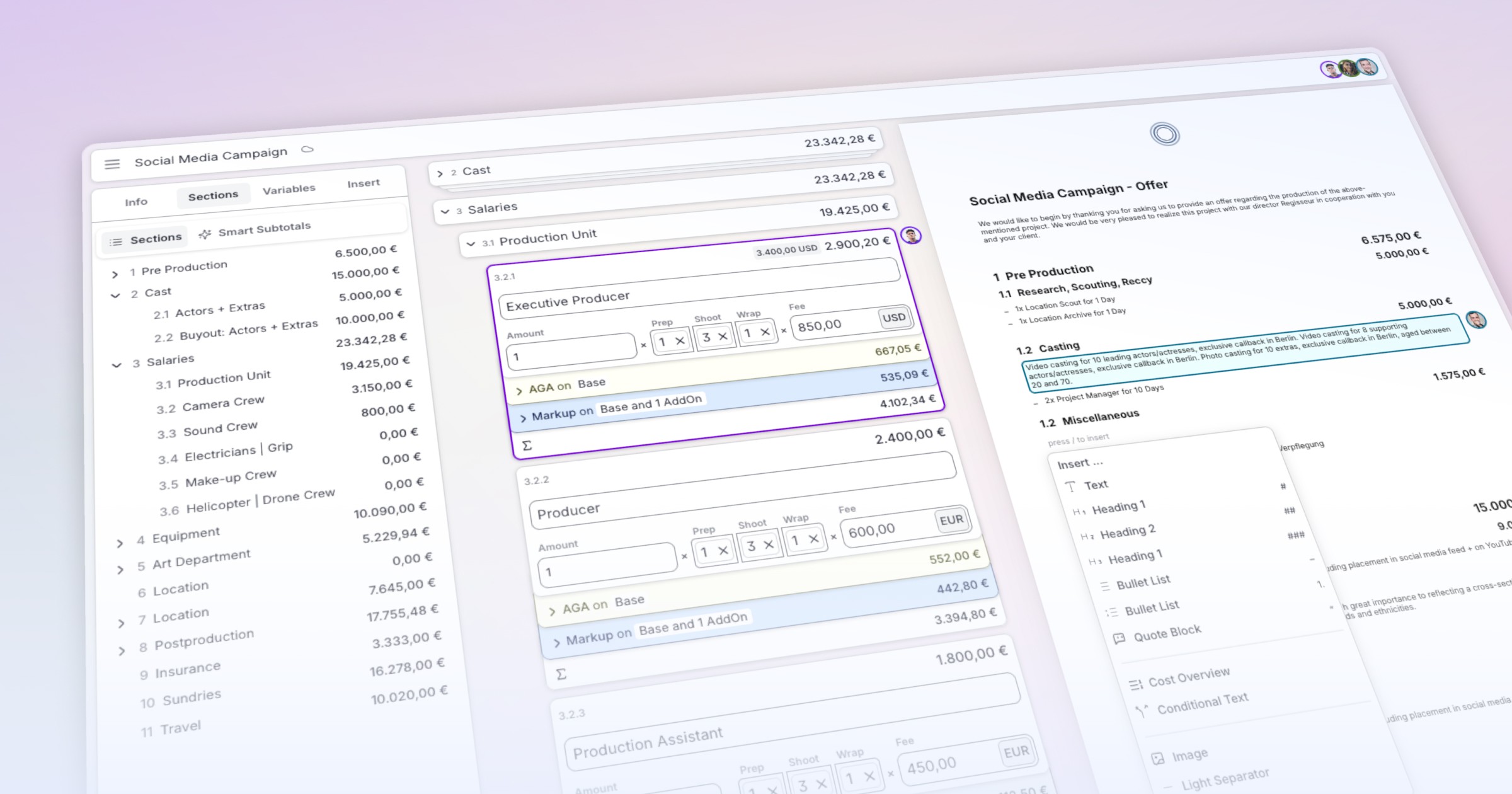
Enter Splinde
This experience is why I built Splinde.
Splinde is the result of every support ticket, every frantic phone call, and every broken macro I dealt with over the last four years. It is a web-based SaaS application designed specifically for the requirements of media and commercial film production.
We took the logic that the industry trusts and removed the friction.
No formulas to break: The calculation logic is baked into the code, not the cells.
True Collaboration: Teams can work on budgets simultaneously.
Instant Updates: No more migrating data between spreadsheets.
Every Budget Structure: No structure baked into sheets. We support SCoPE, AICP, HotBudget or whatever you need.
I am proud of that original Excel tool. It proved that the industry was hungry for automation. But sticking with Excel was like trying to build a skyscraper out of wood, it works for a while, until it gets too big.
Splinde is the steel frame. It’s the tool I wish I had back in 2019 when I promised I could fix everything in “two or three days.”


" width="14.000000299020257px"><path d="M 0 2.652 L 1.365 4.212 L 3.2 5.385 L 3.52 2.662 L 3.2 0 L 1.329 1.03 Z" fill="rgb(0, 131, 45)" height="5.384981000453159px" id="SudOce0vk" transform="translate(7.92 3.107)" width="3.5195954251328203px"/><path d="M 0 0.48 L 0 2.8 C 0 3.33 0.43 3.76 0.96 3.76 L 3.28 3.76 L 3.76 2.006 L 3.28 0.48 L 1.688 0 Z" fill="rgb(0, 102, 218)" height="3.7595678404828874px" id="ptqOLp7eZ" transform="translate(0 7.758)" width="3.7595678404827595px"/><path d="M 3.28 0 L 0 3.28 L 1.688 3.76 L 3.28 3.28 L 3.752 1.774 Z" fill="rgb(233, 66, 53)" height="3.7595678404827595px" id="WJAuODGl2" width="3.7515687599711782px"/><path d="M 3.28 0 L 0 0 L 0 4.959 L 3.28 4.959 Z" fill="rgb(38, 132, 252)" height="4.959429917232605px" id="qovcPZtCe" transform="translate(0 3.279)" width="3.279623009782881px"/><path d="M 9.935 0.11 L 7.839 1.828 L 7.839 7.213 L 9.944 8.939 C 10.26 9.186 10.72 8.961 10.72 8.56 L 10.72 0.481 C 10.72 0.075 10.249 -0.147 9.935 0.11 Z M 4.639 4.48 L 4.639 6.96 L 0 6.96 L 0 10.24 L 6.879 10.24 C 7.41 10.24 7.839 9.81 7.839 9.28 L 7.839 7.213 Z" fill="rgb(0, 172, 71)" height="10.239776677658213px" id="N0Tu670pH" transform="translate(3.28 1.279)" width="10.72037917475268px"/><path d="M 6.879 0 L 0 0 L 0 3.28 L 4.639 3.28 L 4.639 5.759 L 7.839 3.108 L 7.839 0.96 C 7.839 0.43 7.41 0 6.879 0 Z" fill="rgb(255, 186, 0)" height="5.759337968399116px" id="DgEWgdbIb" transform="translate(3.279 0)" width="7.83909890143218px"/></g></svg>)